How to Use Your Laptop as a Monitor for PS4
Your television is busy, broken, or in another room, and your PS4 is sitting ready to play. Your laptop is right there, with a perfectly good screen, so it feels obvious that you should be able to plug the console into it and start playing.
The frustrating part is that the obvious cable does not work the way most people expect. A normal HDMI cable between a PS4 and a laptop will not show the game on the laptop screen, and no settings change on either device will fix that, because the problem is hardware, not software.
The good news is that you still have two real ways to play PS4 games on a laptop screen. The first is free and uses Sony’s own streaming app, PS Remote Play, which sends the game from your PS4 to your laptop over your home network or the internet.
The second uses a small USB capture device that takes the PS4 video signal into your laptop through a USB port. Both methods work today, both have clear tradeoffs, and this guide walks through both of them step by step, including the mistakes that cause black screens, heavy lag, and failed connections.
Before you buy anything or change any setting, it helps to understand why the direct cable fails. That one fact decides which method makes sense for you, and it saves you from buying a cable you do not need.
Quick Answer: You cannot use a laptop as a monitor for PS4 with a plain HDMI cable, because almost every laptop HDMI port is an output, not an input. Instead, use PS Remote Play, which is free: enable Remote Play on your PS4, install the PS Remote Play app on your laptop, sign in with the same PlayStation account, and connect. For a wired, low lag picture, use a USB HDMI capture card: connect the PS4 HDMI output to the capture card, connect the capture card to your laptop by USB, and watch the game in the capture software. Remote Play is best for casual play, and a capture card is best for fast games.
Why Can’t I Just Plug My PS4 Into My Laptop With an HDMI Cable?
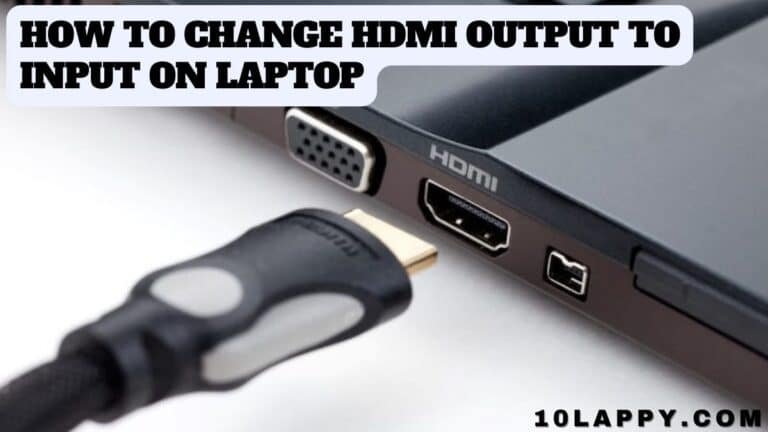
A laptop HDMI port and a television HDMI port look identical, but they do opposite jobs. A television HDMI port is an input: it receives a video signal from a console, a set top box, or a player.
A laptop HDMI port is almost always an output: it sends video from the laptop out to a television or an external monitor. That is why you can connect a laptop to an external monitor and see the laptop screen on that monitor, but you cannot reverse the direction by simply swapping the cable ends.
When you connect a PS4 to a laptop with an HDMI cable, you are connecting one output to another output. The PS4 is trying to send video out, and the laptop is also set up to send video out.
Neither side is listening for an incoming signal, so the laptop screen stays blank, and the PS4 has nowhere to send its picture. This is not a fault in your cable, and it is not a setting you missed. It is how the ports are wired.
There is one rare exception, and it is worth checking before you rule the cable out completely. A very small number of laptops, mostly older high end gaming models, were built with a genuine HDMI input port, usually labelled HDMI in on the laptop itself.
If your laptop has a port clearly labelled HDMI in, and your laptop manual confirms it accepts video input, then a direct HDMI connection can work on that specific machine. If the port is labelled HDMI out, or has no label at all, treat it as an output.
Checking your laptop manual takes two minutes and settles the question for your exact model, which is better than guessing from the shape of the port.
This same output only problem applies to other consoles too. Our guide to connecting a Nintendo Switch to a laptop explains the same capture card workaround, because the Switch faces exactly the same HDMI direction problem.
Once you understand that a laptop screen is not a monitor input, the two working methods below make much more sense.
| Method | What you need | Best for | Watch out for |
|---|---|---|---|
| PS Remote Play | PS4, laptop, internet connection, PlayStation account, controller | Free setup, playing in another room, casual games | Lag on weak Wi-Fi, picture quality depends on your network |
| USB capture card | Capture card, HDMI cable, USB port, capture software | Wired picture, fast action games, recording gameplay | Extra cost, possible HDCP black screen, some cheap cards add delay |
| Direct HDMI cable | Nothing extra | Only laptops with a real HDMI input port | Does not work on almost every laptop, both ports are outputs |
Method 1: Stream Your PS4 Games With PS Remote Play
PS Remote Play is Sony’s official app for controlling a PS4 from another device. You install it on your laptop, sign in with the same PlayStation account you use on your console, and the PS4 picture appears in a window on your laptop. You still play your own console and your own games.
The laptop is simply showing you the console screen from another room, or even from another place with a good internet connection.
This is the method to try first, because it costs nothing and needs no extra hardware. It is also the method Sony supports directly, so the setup steps below follow Sony’s own PlayStation support pages rather than a workaround found on a forum.
What you need for Remote Play
Sony lists the requirements for a Windows PC as Windows 10 (64 bit) or Windows 11, a 7th generation Intel Core processor or later, at least 2 GB of RAM, at least 100 MB of free storage, a display resolution of 1024 by 768 or higher, a sound card, and a USB port.
The Mac version needs macOS Big Sur or later, at least 2 GB of RAM, and at least 40 MB of free storage. Most laptops bought in the last several years clear these requirements easily, but it is worth checking if you plan to use a very old machine.
You also need a PlayStation account, the same account you use on your PS4, and a high speed internet connection. Sony recommends upload and download speeds of at least 5 Mbps as a standard, and at least 15 Mbps for best performance.
That speed matters on both sides of the connection: the PS4 uploading the picture and the laptop downloading it. A fast download speed on your laptop will not save a session if the PS4 is on a weak wireless connection in another room.
For a controller, you can use a DUALSHOCK 4 wireless controller, a DualSense wireless controller, or a DualSense Edge wireless controller. Sony’s PC guidance says to connect the controller to the laptop with a USB cable, which is the simplest and most reliable option.
A wired controller removes one source of wireless problems from a setup that already depends on your network.
Finally, update your PS4 to the latest system software before you start. Sony states this plainly in its Remote Play guidance, and an out of date console is one of the most common reasons a connection fails for no obvious reason.
Go to Settings, then System Software Update, on the PS4 and install anything it offers before you touch the laptop.
Step 1: Enable Remote Play on your PS4
On your PS4, go to Settings, then Remote Play Connection Settings, and turn on Enable Remote Play. This is the master switch. Without it, the laptop app will not find or connect to your console.
Next, go to Settings, then Account Management, then Activate as Your Primary PS4, and select Activate. You can enable this setting on only one PS4 console for each account, and it is what lets the laptop app wake and connect to your console smoothly.
If you have already activated another console as your primary PS4, you will need to decide which console should hold that spot.
If you want to start Remote Play while your PS4 is in rest mode, there is one more setting to turn on. Go to Settings, then Power Save Settings, then Set Features Available in Rest Mode, and turn on both Stay Connected to the Internet and Enable Turning on PS4 from Network.
With those two options on, the laptop app can wake the console from rest mode instead of requiring you to walk over and press the power button first. This is especially useful if the whole point of the setup is playing in a different room from the console.
Step 2: Install PS Remote Play on your laptop
Download the PS Remote Play app from PlayStation’s official Remote Play pages and run the installer, following the on screen instructions. Only download it from PlayStation itself.
Third party downloads that claim to be Remote Play can carry modified software, and there is no reason to risk your PlayStation account on an unofficial copy when the official app is free.
During installation, you may be asked to install additional software that the app needs. Follow the on screen instructions for that as well. When the app opens, sign in with the same PlayStation account you use on your PS4.
If you sign in with a different account, the app will look for a console linked to that other account and will not find yours, which is a confusing failure that looks like a network problem but is really an account mismatch.
Step 3: Connect and start playing
Turn your PS4 on, or leave it in rest mode if you enabled the rest mode settings above. Open PS Remote Play on your laptop, select PS4, and let the app search for your console. The app searches for the PS4 console signed in with your account and connects automatically.
From the second time onwards, you can select the console you connected to previously instead of searching again.
Before you launch a game, open the app settings and look at the video quality options. You can configure resolution and frame rate there. If your network is strong and wired, try a higher quality setting. If the picture stutters or the controls feel delayed, lower the resolution or frame rate and test again.
A smooth lower resolution stream is far more playable than a high resolution stream that freezes every few seconds. This single setting fixes more Remote Play complaints than any other change.
Connect your controller to the laptop with a USB cable, then start your game from the PS4 home screen shown in the app. Your controller inputs travel from the laptop to the console, and the console video travels back to the laptop.
That round trip is why Remote Play always has a little more delay than playing on a television connected directly to the console. For story games, role playing games, and turn based games, that delay is usually unnoticeable.
For fast competitive shooters and fighting games, you will feel it, and the capture card method below is the better choice.
When you finish, quit Remote Play properly from the app rather than just closing the laptop lid. The app lets you leave the console powered on or put it into rest mode when you disconnect. Choosing rest mode keeps the console ready for your next session without leaving it fully on all day.
Method 2: Use a USB Capture Card for a Wired Connection
A capture card is a small device that turns your laptop into a display for an HDMI source. You connect the PS4 HDMI output to the capture card, connect the capture card to your laptop with a USB cable, and open the capture software on your laptop.
The software shows the PS4 picture in a window, which you can make full screen. In effect, the capture card gives your laptop the HDMI input it was never built with. The same setup also puts an Xbox 360 on a laptop screen, using a capture device in place of a direct cable.
This method costs money, but it solves the two biggest weaknesses of Remote Play: it does not depend on your home network, and it does not send your game video over the internet and back. The picture travels over a cable from the console to the card and then over USB into your laptop.
That shorter path usually means lower delay and a steadier picture, which matters most in fast games where a fraction of a second decides a result.
What to look for in a capture card
You do not need the most expensive card for this job, but you do need one that matches how you will actually use it. The key feature is that it accepts an HDMI input and connects to a computer by USB.
Cards that only record to a memory card, or that only pass video through to a television, will not show the game on your laptop.
Check the card’s stated input resolution and whether it needs USB 3.0. A card that only works over USB 2.0 can still show a picture, but it is more likely to add delay or limit the picture quality.
Also check whether the card maker provides its own viewing software, or whether you are expected to use a general program such as OBS Studio. Either route works, but a card with simple viewing software is easier if you only want to play and never plan to record or stream.
Do not buy a capture card on the promise of zero delay. Every capture device adds some delay, because it has to receive, process, and hand the video to your laptop. Good cards keep that delay small enough that most players stop noticing it.
Cheap cards can add enough delay to make timing based games frustrating. If you plan to play competitive games this way, read the card maker’s own specifications for latency before you buy, and buy from a seller with a return policy so you can test it with your own console and laptop.
Step 1: Connect the PS4 to the capture card
Turn the PS4 off before you change cables. Connect an HDMI cable from the PS4 HDMI output to the HDMI input on the capture card. If the card has an HDMI output as well, that output is for passing the signal on to a television at the same time.
You can leave it empty if you only want the picture on your laptop.
Connect the capture card to your laptop with its USB cable, using a USB 3.0 port if the card asks for one. USB ports on a laptop are not all equal: the faster ports are usually marked, and your laptop manual will say which ones are USB 3.0.
Using a slower port by mistake is a common cause of a choppy capture picture.
Step 2: Open the capture software and check the picture
Open the capture card’s own software, or add the card as a video capture source in OBS Studio if you prefer that program. The PS4 picture should appear in the preview window.
Make the preview full screen when you want to play, and keep the software window in front of any other windows so the game stays visible.
If the preview is black but the software recognises the card, the most likely cause is HDCP, the copy protection system the PS4 uses on its HDMI output. On the PS4, go to Settings, then System, and turn off Enable HDCP. That setting exists precisely because HDCP can block capture devices from showing the picture.
Note the tradeoff: turning HDCP off can stop some video streaming apps on the PS4 from playing protected video, so turn it back on if you go back to watching those apps on a television. For games, turning it off is the standard fix, and it is a PS4 system setting, not a hack.
If the picture appears but looks washed out, stretched, or low resolution, check two places. First, check the PS4 video output settings under Settings, then Sound and Screen, then Video Output Settings, and confirm the resolution is set sensibly for your capture card rather than forced to a value the card cannot handle.
Second, check the capture software settings for resolution and scaling. A mismatch between what the console sends and what the software expects is a common cause of a soft or stretched picture.
Step 3: Connect your controller and play
Connect your DUALSHOCK 4 controller to the PS4 itself, exactly as you would for normal television play, or connect it to the laptop if your capture setup routes controller input that way.
The simplest arrangement is the normal one: the controller talks to the console, and only the video travels through the capture card to the laptop. That keeps controller delay out of the picture entirely.
Test with a game you know well before you settle in for a long session. Play for a few minutes and pay attention to whether button presses feel instant or slightly late.
If the delay bothers you, try a different USB port, close other programs on the laptop, and check whether the capture software has a low latency or preview mode. If the delay stays bad after those checks, the card itself is the limit, and no software setting will fix it.
Which Method Should You Choose?
Choose Remote Play if you want to play today with no extra purchase, if your PS4 and laptop share a strong home network, and if you mostly play story driven, turn based, or casual games.
It is also the right choice if the console and the laptop are in different rooms, because a capture card needs a cable between them and cannot help across the house.
Choose a capture card if you play fast action games, if your Wi-Fi is weak or crowded, if you want to record your gameplay while you play, or if you want the steadiest picture you can get on a laptop screen.
The wired path is simply more predictable than a stream, and predictability is what makes a game feel responsive.
You can also use both. Many players start with Remote Play to confirm the idea works for them, then buy a capture card later when they know they will use the laptop screen regularly.
There is no conflict between the methods, and you can switch between them depending on where you are playing and what game you are playing. The only setup you should not waste time on is the plain HDMI cable between two outputs, which will not work no matter how many times you reseat it.
If your laptop struggles to run the Remote Play app smoothly while other programs are open, the same background app cleanup that helps gaming laptops in general helps here too.
Our guide to reducing CPU usage while gaming walks through closing background apps and overlays before a session, which leaves more processor time for decoding the stream. A laptop that is already busy will show a worse Remote Play picture than the same laptop with a clean desktop.
How to Reduce Lag and Fix Common Problems
Most problems with using a laptop as a PS4 monitor fall into a small set of causes, and working through them in order saves a lot of guessing.
Start with the network if you use Remote Play. Use a wired Ethernet connection for the PS4 if you can, and for the laptop if you can. A wired connection removes Wi-Fi interference from neighbours, microwaves, and other devices in your home, and it is the single biggest improvement for a stuttering stream.
If wired is impossible, use the 5 GHz Wi-Fi band rather than 2.4 GHz, keep the laptop reasonably close to the router, and avoid streaming video on other devices during your session.
Next, lower the Remote Play video quality settings in the app. Dropping resolution or frame rate reduces the amount of data the network must carry, which often turns an unplayable stream into a smooth one.
Players sometimes resist this step because they want the sharpest picture, but a smooth game at a lower resolution beats a sharp slideshow every time.
Close unnecessary programs on the laptop. A browser with many tabs, a cloud sync tool, a screen recorder, and a chat app all compete for processor time and network bandwidth while the stream runs. Close what you do not need for the session, then restart the stream and compare.
If the improvement is large, you have found a background app problem, not a console problem.
Check the account and console settings if the app cannot find your PS4 at all. Confirm Remote Play is enabled on the console, confirm the console is activated as your primary PS4, confirm both devices use the same PlayStation account, and confirm the console system software is up to date.
Then confirm both devices are on a network that can reach the internet. A console that has been offline, or an app signed into the wrong account, will fail in ways that look like network faults.
For capture card setups, work through a different checklist. Confirm the HDMI cable is in the card’s input, not its output. Confirm the USB cable is in a fast enough port. Turn off HDCP on the PS4 if the preview is black.
Confirm the capture software is showing the card as its source, not a webcam or another device. And if the picture is delayed, test with the capture software as the only program running, because a busy laptop adds delay on top of whatever the card itself adds.
Finally, remember that a laptop screen used this way is still a compromise compared with a television connected directly to the console. Remote Play adds network delay, and a capture card adds processing delay. For most games that compromise is invisible.
For competitive games where timing is everything, a direct television connection remains the best option, and the laptop screen is best kept for casual sessions, travel, or a busy television.
Can I Use My Laptop as a Monitor for PS4 Without Wi-Fi?
With Remote Play, you need a network connection, but that does not always mean the internet in the way people expect. If your PS4 and laptop are on the same home network, the stream can travel across your local network.
A wired connection through your router is still a network connection, even though no internet traffic needs to leave your home for the game itself. If you have no router and no Wi-Fi at all, Remote Play is not the right method.
A capture card is the answer for a genuinely offline setup. It needs no network, no Wi-Fi, and no internet connection, because the video travels over cables from the console to the card to the laptop.
If you travel with a PS4 and a laptop, or you play somewhere with unreliable internet, the capture card is the dependable option. Pack the card, one HDMI cable, and one USB cable, and you have everything the method needs.
Frequently Asked Questions
Can you use a laptop as a monitor for PS4 with an HDMI cable?
No, not with a normal laptop. Almost every laptop HDMI port is an output that sends video out, so connecting it to the PS4 HDMI output connects two outputs together and shows nothing. You need PS Remote Play or a USB capture card instead, unless your laptop has a rare HDMI input port labelled HDMI in.
Is PS Remote Play free for PS4?
Yes. The PS Remote Play app is free to download from PlayStation, and using it with your own PS4 and your own games needs no extra subscription. You need a PlayStation account, a PS4 with the latest system software, and a high speed internet connection. Sony recommends at least 5 Mbps for standard use and at least 15 Mbps for best performance.
Why is my PS4 Remote Play laggy on my laptop?
Lag usually comes from the network, not the console. A weak Wi-Fi signal, a busy home network, or a PS4 on a poor wireless connection all add delay. Use wired Ethernet for the PS4 and laptop if possible, switch to 5 GHz Wi-Fi if you must use wireless, lower the video quality settings in the Remote Play app, and close other programs on the laptop that use the network or processor.
Why does my capture card show a black screen for PS4?
The most common cause is HDCP, the copy protection on the PS4 HDMI output. On the PS4, go to Settings, then System, and turn off Enable HDCP. Also check that the HDMI cable is plugged into the capture card input rather than its output, and that the capture software is set to show the capture card as its video source.
Can I play PS4 on a MacBook using the same methods?
Yes. PS Remote Play has a Mac version, and Sony lists macOS Big Sur or later, at least 2 GB of RAM, and at least 40 MB of free storage among its requirements. A USB capture card that supports macOS will also work on a MacBook, but check the card maker’s stated Mac support before buying, because not every card supports both Windows and macOS.
The Verdict
A laptop is not a plug and play monitor for a PS4, and the sooner you accept the HDMI output problem, the sooner you get playing. PS Remote Play is the free, official route and the right first try for most players, especially for casual and story driven games on a strong home network.
A USB capture card is the wired upgrade for fast games, weak Wi-Fi, and offline play, and it is worth the cost if you will use the laptop screen regularly.
Either way, you keep your own console, your own games, and your own saves, and you gain a second screen for your PS4 without buying a new television.
If the laptop itself is old and slow, our guide to converting a normal laptop into a gaming laptop covers the upgrades that make the biggest difference first.