How to Charge a Laptop Battery Externally
Your laptop charger is missing, the charging port is broken, or you are far from a wall socket, and the battery is running low. That is exactly the moment when “charging a laptop battery externally” sounds like a simple fix.
In practice, the phrase covers several very different things, and only some of them are safe. This guide separates the safe methods from the dangerous ones, so you can get power into your laptop without damaging the battery, the laptop, or yourself.
Quick Answer: The safest way to charge a laptop battery externally is to charge the laptop through a different power path, not to wire power straight into a bare battery. For most modern laptops, that means a USB-C Power Delivery power bank or charger that matches your laptop’s wattage. If your laptop has a removable battery, you can also charge that pack on its own in a dedicated external charger made for that exact battery model. Never connect wires, clips, or a bare power supply directly to a lithium battery’s terminals. That bypasses the battery’s protection circuit and can cause fire, swelling, or explosion.
What Charging a Laptop Battery Externally Really Means
The first thing to get clear is what kind of laptop you have, because it decides which methods are even possible. Most laptops sold in the last ten years have a sealed, internal battery.
You cannot take it out without opening the case and disconnecting it, and on many models the manufacturer tells you not to remove it at all. For those laptops, “external charging” does not mean taking the battery out.
It means getting power into the laptop from an external source other than its original charger: a power bank, a car charger, a docking station, a universal adapter, or a portable power station.
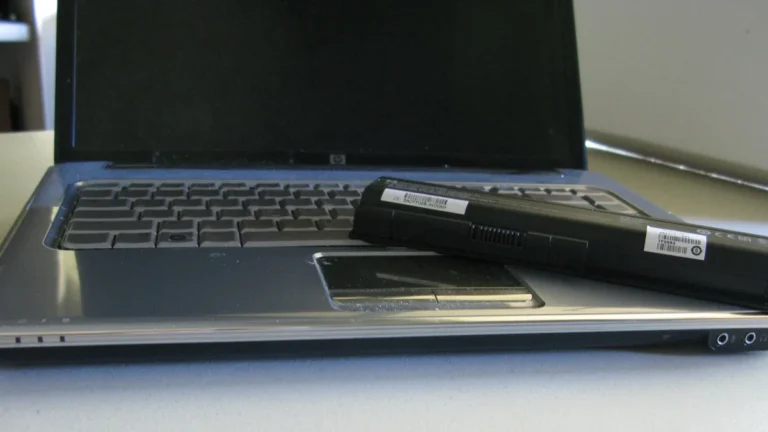
A smaller group of laptops, mostly older business models and some older consumer models, still have a removable battery pack that slides out with a latch. ThinkPad models with a dual battery design are the best known example, with an internal battery plus a removable external pack.
For those laptops, a second meaning applies: you can remove the pack and charge it on its own, away from the laptop, in a charger built for that pack.
That is the only version of external battery charging that involves handling the battery itself, and it only works with a charger designed for that exact battery.
This distinction matters because the old advice on this topic often blurred the two. Articles used to suggest charging any laptop battery with a universal adapter, a power bank, or even improvised wiring, as if every battery could be taken out and charged on a bench.
That is not true for sealed laptops, and improvised wiring is never a safe method for any lithium battery. A lithium battery pack is not a simple cell with two terminals. It contains a protection circuit that watches voltage, current, and temperature, and that circuit is part of what keeps charging safe.
Bypass it, and you remove the safety net.
So before you try anything in this guide, identify your laptop. Check whether the battery is removable by looking at the underside for latches, or by checking your exact model’s manual on the manufacturer’s support site. Then read the label on your original charger.
It lists an output voltage and current, for example 20V and 3.25A. Multiply volts by amps to get watts: 20 times 3.25 equals 65 watts. That wattage is the number every external method in this guide has to match.
Keep it in mind as you read on, because almost every failure in external charging comes back to a wattage mismatch.
First, Check the Three Things That Decide Your Method
You do not need to buy anything before you answer three questions. The answers point straight to the right method and save you from buying the wrong kit.
First, can your laptop charge over USB-C? Look for a USB-C port marked with a small battery or charging symbol, or check the manual and the manufacturer’s support page for your exact model. Many modern thin laptops charge over USB-C. Many older laptops, and some gaming laptops, charge only through a round barrel plug.
Some gaming laptops accept USB-C charging for light work but still need their full size charger for heavy use, because USB-C tops out below what the laptop draws under load.
Apple states the same principle for Mac laptops: if your Mac charges over USB-C, you can charge it with any USB-C adapter or display that supports USB Power Delivery, even one with lower wattage than recommended.
For the best charging experience you should use an adapter that provides at least the minimum wattage Apple recommends for your Mac.
A low wattage source may charge slowly, only hold the level, or still lose charge while the laptop is busy.
Second, what wattage does your laptop need? Use the original charger’s label, as described above. A 45 watt laptop, a 65 watt laptop, and a 130 watt workstation do not have the same options.
A phone sized power bank that outputs 15 or 20 watts will not charge a 65 watt laptop in any useful way. It may show a charging symbol and still lose charge while you work. That is not a fault in the laptop. It is a power bank that is too small for the job.
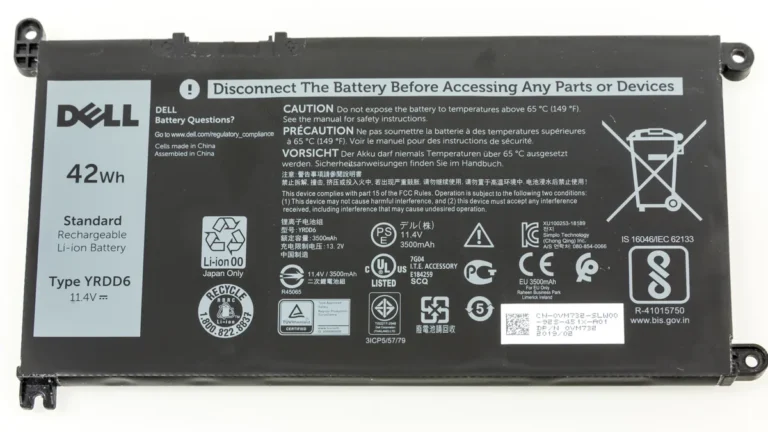
Third, is the battery removable, and if so, what is its exact model number? The model number is printed on the battery pack itself, usually on a label with a part number and a voltage rating.
A dedicated external charger is only safe if it is made for that battery model or for that battery family as listed by the charger maker. A charger that “looks about right” or has a connector that happens to fit is not good enough.
Voltage, connector polarity, and the battery’s communication pins all have to match, and the only way to be sure is the model list in the charger’s manual.
Answer those three questions and the rest of this guide becomes a simple choice. If the laptop charges over USB-C, start with Method 1. If it charges only through a barrel plug, start with Method 2.
If it has a removable battery and you have a second pack, Method 3 is the one that actually charges a battery away from the laptop. Methods 4 and 5 cover the car, the outdoors, and the spare battery swap.

Method 1: Charge With a USB-C Power Delivery Power Bank or Charger
This is the best method for most people, because it charges the laptop normally, through its own charging circuit, just from a different source. The battery stays inside the laptop, the laptop’s own protection stays in charge, and nothing is improvised. You are simply replacing the wall charger with a portable one.
USB Power Delivery is the standard that makes this work. It is a protocol, maintained by the USB Implementers Forum, in which the charger and the laptop negotiate a voltage and current that both can handle. The standard power range reaches 100 watts at 20 volts and 5 amps.
USB PD 3.1 added an extended power range that reaches 240 watts at up to 48 volts, with new fixed levels of 28 volts, 36 volts, and 48 volts. In practice, most laptops need 45, 65, 90, or 100 watts, and a few high end models need 140 watts.
The negotiation is the safety feature: the laptop asks for what it can use, and the charger supplies only what was agreed.
To use this method, pick a power bank or a USB-C charger whose single port USB-C PD output meets or beats your laptop’s charger wattage. If your laptop shipped with a 65 watt charger, a 65 watt PD bank is the right match.
A 45 watt bank may work for a light laptop that shipped with a 45 watt charger, but it will be marginal for a 65 watt machine. Check the fine print, not just the headline number. Many multiport banks and chargers share their total output across ports.
A bank advertised as 100 watts total may give only 45 watts from one port when another port is in use. For laptop charging, look at the output of the single USB-C port you will actually use, with the other ports loaded the way you plan to use them.
The cable matters just as much as the bank. A plain USB-C cable is not automatically a high power cable. Under USB Power Delivery, a basic 3 amp cable tops out at 60 watts at 20 volts.
Above 60 watts, you need a 5 amp rated cable, usually an electronically marked cable, and for extended power range levels above 100 watts you need a cable rated for that range. If the cable is underrated, it becomes the bottleneck, and the laptop will charge slowly no matter how good the bank is.
Use a cable whose rating is printed on its packaging, or the cable that came with a charger of the same rating.
The steps are simple. Charge the power bank fully first, from a wall socket, so you know how much energy you actually have. Connect the bank to the laptop’s charging USB-C port, not just any USB-C port, because some laptops have more than one USB-C port but only one accepts power.
Watch the charging indicator for a minute. It should show charging, not just connected. If the percentage rises while the laptop is asleep but falls while you work, the bank is too weak for the load. Close heavy programs, dim the screen, or switch to a higher wattage bank.
A laptop under full load can draw more than a weak source supplies, and in that case the battery still drains, just more slowly.
Capacity is the second number to check. A bank’s capacity is usually given in watt hours (Wh) or milliamp hours (mAh) at a nominal voltage, and the two are not directly comparable across brands without converting. As a rough guide, a typical laptop battery holds roughly 50 to 90 watt hours.
A 20,000 mAh bank at around 3.7 volts holds roughly 74 watt hours before conversion losses, so in real use it may give you roughly one partial charge, not two full ones. Conversion losses, heat, and the power the laptop uses while it charges all eat into the total. Do not buy on capacity alone.
A bank with a huge capacity but only 20 watts of output will still be useless for a laptop. Wattage first, capacity second.
This method also has a useful side benefit. A USB-C PD bank can charge the laptop while the laptop is off, asleep, or in use, and it can be recharged itself from a wall socket, a car socket, or a solar panel later.
It is the most flexible external charging kit you can own, and it is the one to buy first if you only buy one thing from this guide.
Method 2: Charge With a Universal Adapter or Docking Station
If your laptop charges only through a barrel plug, USB-C will not help, and you need a power source that speaks the laptop’s own plug language. That is where a universal laptop adapter and a docking station come in.
Both are legitimate, manufacturer style solutions, and both depend on matching the plug, the voltage, and the wattage exactly.
A universal laptop adapter is a mains powered charger that comes with a set of interchangeable tips, one of which fits your laptop’s charging socket. It is “universal” only in the sense that it covers many models, not that any tip will do.
You must pick the tip that matches your laptop’s socket and polarity, set the adapter to the correct voltage if it has a voltage selector, and confirm that its wattage meets or beats your original charger’s wattage.
A 65 watt universal adapter on a 90 watt laptop may charge slowly or not at all under load, and a 90 watt adapter on a 65 watt laptop is fine, because the laptop draws only what it needs. Read the adapter’s compatibility list for your exact laptop model before you buy.
If your model is not listed, do not guess. Contact the adapter maker or buy the manufacturer’s own replacement charger instead.
A docking station with Power Delivery is the tidier version of the same idea for laptops that do charge over USB-C, and for some barrel plug laptops with a dock connector. A USB-C dock connects to the laptop with one cable and can deliver power, video, and USB ports at the same time.
Check the dock’s PD output for the laptop port specifically, not the dock’s total power, because some docks reserve power for their own ports. A dock that delivers 65 watts to the laptop is a proper charger for a 65 watt laptop.
A dock that delivers only 45 watts to the laptop will be slow for that same machine, even if the dock’s own power brick is rated much higher.
The steps for a universal adapter are straightforward. Switch the laptop off or put it to sleep first, so you are not plugging and unplugging under load. Fit the correct tip firmly, with no wobble, and confirm the voltage setting if the adapter has one.
Plug the adapter into the wall, then into the laptop, and check the charging indicator. If the laptop shows no charging, stop and recheck the tip and the voltage setting before you try another tip. Forcing a wrong tip, or running the wrong voltage, can damage the charging circuit.
If the adapter gets unusually hot, smells of plastic, or buzzes loudly, unplug it and stop using it. Heat is covered in more detail in our guide on why a laptop charger gets hot, and the same warning signs apply here.
A universal adapter is a replacement charger, not a battery charger in the bench sense. It still charges the battery through the laptop. That is a strength, not a weakness, because it keeps the laptop’s own battery management in control.
Treat any universal adapter that promises to charge a bare battery directly, with clips or loose leads, as a different and unsafe product, and do not buy it.
Method 3: Charge a Removable Battery in a Dedicated External Charger
This is the one method that truly charges a laptop battery externally, away from the laptop, and it only applies if your battery is removable. If your battery is sealed inside the case, skip this section entirely. Do not open a sealed laptop to remove the battery just to try this method.
That is a repair job, not a charging method, and on many models it voids the warranty and risks damaging the battery.
A dedicated external battery charger is a cradle or dock that the battery pack slides into. It connects to the battery’s own connector, talks to the battery’s protection circuit, and charges it under controlled conditions, with indicators for charging and full.
It is made for a specific battery model or family, and the charger maker’s manual lists exactly which batteries it supports. Buy only a charger that lists your battery’s part number. If the part number is not listed, the charger is not for your battery, even if the pack physically fits.
The steps are simple, and the safety checks matter more than the steps. First, shut the laptop down fully, unplug it, and remove the battery using its latches. If yours is an Acer, follow the Acer battery removal steps before you lift the pack out.
Do not pry a stuck battery, and do not remove a battery that is swollen, cracked, leaking, or hot. A damaged battery is not a charging problem. It is a fault, and it should go to the manufacturer or a qualified repairer, not into a charger.
Second, check the battery’s contacts for dirt or damage, and wipe them gently with a dry cloth if they are dusty. Do not use water, and do not scrape the contacts. Third, slide the battery into the charger until it clicks or seats fully, exactly as the charger manual shows.
A half seated battery may show a charging light and still not charge, or may charge intermittently. Fourth, plug the charger into a wall socket and watch its indicator. Most chargers show one colour or pattern while charging and another when full.
Leave the battery until it shows full, then remove it and fit it back into the laptop. Check that the laptop recognises it and shows a sensible charge level.
There are limits to this method that are worth knowing before you buy. An external charger charges one pack at a time, and a full charge can take a few hours, just as it would inside the laptop. It does not make charging faster. It also does not fix a worn battery.
If a battery that used to last four hours now lasts forty minutes, a different charger will not restore its capacity. The battery’s chemistry has aged, and the honest fix is a replacement pack, not a new charger.
If you are weighing that decision, see our guide on how much it costs to replace a laptop battery before you spend money on charging kit for a pack that is already worn out.
Also, be careful with cheap, unbranded external chargers. A charger with no stated battery list, no safety certifications, and no overcharge or short circuit protection is a risk, not a bargain.
Look for a charger from the battery maker, the laptop maker, or a reputable third party whose specifications you can actually read, with stated overcharge, overcurrent, short circuit, and over temperature protection. If the listing cannot tell you which batteries it supports, do not buy it.
Method 4: Charge From a Car, a Power Station, or Solar
Sometimes the problem is not the charger but the location. You are in a car, at a campsite, or on a site with no wall socket, and you need power from whatever is available.
The methods here are all versions of Method 1 and Method 2, with a different power source in front of them, so the same wattage rules apply.
In a car, the simplest route is a USB-C PD car charger in the 12 volt socket, matched to your laptop’s wattage, with a properly rated cable.
If your laptop has no USB-C charging port, use a pure sine wave inverter with your normal laptop charger, sized above the charger’s wattage and kept within the socket’s fuse limit.
The full version of this, including the fuse maths and the engine off warning, is in our guide on how to charge a laptop in a car.
The short version is this: charge while the engine runs, keep engine off charging short, and never replace a blown fuse with a higher rated one to force a charger to work.
A portable power station is a bigger, mains socket version of a power bank. It can run your normal laptop charger for hours, and you can recharge the station itself from a wall socket or a car later.
It is heavier and more expensive than a power bank, but it is the right choice when you need to charge a barrel plug laptop away from mains, or when you need power for more than one device.
Check the station’s continuous output, not just its peak output, and check that its mains socket output covers your laptop charger’s wattage. Keep its vents clear, and do not run it flat in extreme heat.
Solar charging needs a clear expectation. You cannot reliably charge a laptop directly from a small solar panel, because a panel’s output varies with cloud, angle, and time of day, and a laptop expects a stable negotiated supply.
The workable solar setup is two stage: a solar panel charges a power bank or power station during the day, and the bank or station charges the laptop. A folding panel in the 60 to 100 watt range, paired with a PD bank or station, is a realistic portable kit.
A tiny 10 or 20 watt panel will charge a phone, not a laptop, and claiming otherwise is a common source of disappointment. If you go solar, check the panel’s stated output at realistic conditions, not just its peak label, and plan on the bank doing the actual laptop charging.
In all three cases, the safety rules are the same as at home. Keep chargers and banks ventilated, keep them out of direct sun in a hot car, and do not charge a laptop that is wet, swollen, or damaged.
Heat is the enemy of both the charger and the battery, and a laptop charging on a soft surface that blocks its vents will throttle and charge slowly. Our guide on how to stop your laptop from overheating covers the ventilation habits that matter here too.
Method 5: Swap in a Spare Charged Battery
For laptops with a removable battery, the fastest “external charge” is sometimes not a charge at all. It is a swap. Keep a second battery pack charged, and when the first runs low, swap it in.
You get a full battery in under a minute, with no waiting, no cables, and no compatibility maths beyond buying the right pack for your model.
This works best on models designed for it, such as ThinkPads with a removable external pack alongside an internal battery. The internal battery keeps the laptop alive during the swap, so you do not even need to shut down.
On older single battery laptops, you will need to shut down, swap the pack, and boot again, which takes a few minutes but is still faster than any charge.
Either way, the spare pack itself still has to be charged somewhere, either inside the laptop on a previous charge, or in a dedicated external charger from Method 3. A spare battery is a way of carrying a charge, not a way of creating one.
Store a spare pack sensibly. Lithium batteries prefer a cool, dry place, roughly half charged if they will sit unused for weeks, and they should be recharged at least a few times a year so they do not sit flat for months.
A pack left flat for a very long time can become unusable, and in rare cases unsafe. Check the pack regularly for swelling. If a pack is swollen, stop using it, do not try to charge it, and take it to a proper battery recycling point or the manufacturer.
Swelling is a fault, not a sign that the pack needs a different charger. For a pack in everyday use rather than storage, keeping routine charges below full can slow long term wear.
A spare battery is also the honest answer when the real problem is a worn battery rather than a missing charger. If your laptop dies quickly even on a full charge, no external charging method will fix the runtime. A new pack, or a battery replacement, will.
That is a different purchase, and it is worth making the distinction before you buy charging kit for a battery that is already at the end of its life.
What Never to Do: The Dangerous Methods to Avoid
This section matters more than any single method above, because the dangerous methods are the ones that still circulate in old articles and videos. They sound clever, and they can destroy a battery or start a fire.
Never connect wires, alligator clips, or a bare bench power supply directly to a lithium battery pack’s terminals. A laptop battery is not a lead acid car battery. Its terminals connect to a protection circuit and a battery management system, and applying an uncontrolled voltage bypasses that protection.
The result can be overcharging of individual cells, overheating, venting, swelling, or fire. There is no safe voltage to guess, no safe wire to improvise, and no video trick that makes this acceptable. If a guide tells you to strip wires and touch them to battery terminals, close it.
Never use a charger with the wrong voltage for a barrel plug laptop. A universal adapter set to the wrong voltage, or a charger from a different laptop that happens to fit the socket, can overvolt the charging circuit. The plug fitting is not proof of compatibility.
Voltage, polarity, and wattage all have to match, and the manufacturer’s compatibility list is the check.
Never charge a damaged battery. Swelling, cracking, leaking, a smell of chemicals, or a battery that gets very hot during charging are all stop signals. Unplug it, move it away from flammable material if you can do so safely, and get advice from the manufacturer or a qualified repairer.
Do not put a damaged battery into an external charger to “see if it recovers”. It will not recover, and charging it increases the risk.
Never charge a lithium battery unattended in a risky place: on a bed, under a pile of clothes, in a closed bag, or in a very hot car. Charging generates heat, and heat needs somewhere to go. A charger or battery that is warm is normal.
A charger or battery that is too hot to hold comfortably, smells of plastic, or buzzes loudly is not normal. Unplug it and let it cool before you investigate.
Never try to “revive” a dead lithium battery by freezing it, puncturing it, or shorting its terminals. These are myths, and puncturing or shorting a lithium cell is actively dangerous.
A battery that will not charge at all, even with the correct charger and a known good cable, has either failed or its protection circuit has locked it out for safety. That is the protection doing its job. Replace the battery through the manufacturer or a qualified repairer.
Finally, never buy charging kit that hides its specifications. A charger, bank, or external cradle with no stated wattage, no stated voltage, no battery list, and no safety certifications is not a bargain. It is an unknown. For a device that stores as much energy as a laptop battery, unknown is the wrong choice.
Troubleshooting: When External Charging Does Not Work
The laptop shows no charging at all
Check the simplest things first. Is the power bank or charger actually charged and switched on? Some banks need a button press to start output. Is the cable fully plugged into both ends? Is it plugged into the laptop’s charging port, not a data only USB-C port?
Does the same cable and source charge another device, like a phone? If the source is dead for everything, the source is the problem, not the laptop.
Next, check the wattage. A bank below the laptop’s needs may show a charging symbol and still not charge, or may be rejected by the laptop’s firmware. Try a source that matches the original charger’s wattage.
If the laptop charges from its wall charger but not from the external source, the external source is too weak, the cable is underrated, or the source does not support the power profile the laptop wants.
If nothing charges the laptop, even the original charger, check the charging port for debris, try a different socket, and consider that the port, the battery, or the charging circuit may need repair.
A proper reboot can also clear a stuck charging state on some laptops, and it costs nothing to try before you assume a hardware fault.
The laptop charges very slowly, or the battery still drains
This is almost always a wattage mismatch. A source below the laptop’s needs will charge slowly when the laptop is asleep, and may not keep up at all when the laptop is working hard. Close demanding programs, lower screen brightness, and put the laptop to sleep to see if the percentage starts rising.
If it rises asleep but falls in use, you need a higher wattage source. Also check for shared output: unplug other devices from a multiport bank or charger and see if the laptop charges faster on its own. And check the cable.
A 3 amp cable caps you at 60 watts at 20 volts, no matter what the bank claims.
The external charger does not recognise a removable battery
Reseat the battery in the cradle until it clicks, and check that the battery’s part number is on the charger’s supported list. Clean the contacts gently with a dry cloth. If the charger still shows no battery, or shows a fault light, try the battery back in the laptop.
If the laptop also does not recognise it, the battery may have failed or its protection may have locked it out. If the laptop recognises it but the external charger does not, the charger is the wrong model for that battery, even if the pack fits.
The charger, bank, or battery gets very hot
Unplug it and let it cool. Check for a loose plug, a damaged cable, and a source that is undersized for the load. Warm is normal. Too hot to hold comfortably is not. If a bank or charger is repeatedly hot, stop using it.
Heat shortens the life of the charger, the cable, and the battery, and it is often the first sign of a poor connection or a failing cell. Do not keep using hot kit and hope it settles.
The battery charges externally but dies quickly in the laptop
The battery is probably worn, not undercharged. An external charger cannot restore lost capacity. Check the battery’s health in the operating system: on Windows, a battery report compares design capacity with full charge capacity, and a large gap means wear. If the gap is large, the honest fix is a replacement pack.
Spending more on charging kit for a worn pack is spending in the wrong place.
How to Choose the Right External Charging Kit
With five methods on the table, the choice comes down to your laptop and your situation, not to which method sounds most impressive.
If your laptop charges over USB-C, buy a USB-C PD power bank or charger at your laptop’s wattage, with a cable rated for that wattage, before you buy anything else. It covers home, travel, car, and office use, and it charges through the laptop’s own safe charging path.
If your laptop charges only through a barrel plug, buy the manufacturer’s replacement charger first, and a universal adapter only if your exact model is on its compatibility list. A dock with the right PD or dock output is the tidy alternative if you also want extra ports.
If your laptop has a removable battery and you often work away from sockets, buy a second genuine pack and, if you want to charge it away from the laptop, a dedicated external charger that lists your battery’s part number.
That combination gives you a swap in under a minute and a charged spare whenever you need it.
If you work from a car or outdoors, add a PD car charger or a power station to the kit above, sized the same way, and treat solar as a way to recharge the bank, not as a direct laptop charger.
Whatever you buy, buy it once and buy it right. Look for a stated PD wattage or a stated voltage and current, a stated cable rating, a stated battery compatibility list where one applies, and overcurrent, overvoltage, short circuit, and over temperature protection, from a maker whose specifications you can actually read.
A cheap unbranded charger with no stated output is a false economy. It may charge a phone fine and fail a laptop completely, or worse, run hot and damage a socket or a battery.
| Method | Best for | What you need | Watch out for |
|---|---|---|---|
| USB-C PD bank or charger | Most modern laptops | PD output at your laptop wattage, 5 amp cable above 60 watts | Shared port output, underrated cables, wrong USB-C port |
| Universal adapter or dock | Barrel plug laptops, desk setups | Correct tip, correct voltage, wattage at or above original | Wrong tip or voltage, compatibility list not checked |
| Dedicated external charger | Removable battery packs only | Charger listing your exact battery part number | Unbranded chargers, damaged or swollen packs |
| Car, power station, or solar | Away from wall sockets | PD car charger, pure sine wave inverter, or station sized above charger wattage | Fuse limits, engine off drain, solar used as direct charger |
Frequently Asked Questions
Can you charge a laptop battery without the laptop?
Yes, but only if the battery is removable and you use a dedicated external charger made for that exact battery model. For a sealed internal battery, you cannot charge the battery on its own without opening the laptop, and you should not try. Instead, charge the laptop through a USB-C PD source, a universal adapter, or a dock, which charges the battery through the laptop’s own circuit.
Can I charge my laptop with a power bank?
Yes, if the power bank supports USB-C Power Delivery at your laptop’s wattage and you use a cable rated for that wattage. A phone sized bank at 15 or 20 watts will not usefully charge most laptops. Check your original charger’s wattage, pick a bank that meets or beats it on a single port, and expect roughly one partial charge from a typical 20,000 mAh bank after losses, not several full charges.
Is it safe to charge a laptop battery with a universal adapter?
Yes, when the adapter is used as a replacement laptop charger, with the correct tip, the correct voltage, and a wattage at or above your original charger, and your exact laptop model is on its compatibility list. It is not safe to use a universal adapter, clips, or loose wires to charge a bare battery directly. That bypasses the battery’s protection and is a fire risk.
Why does my laptop say it is charging but the battery percentage falls?
The power source is below what the laptop is using. A weak bank or charger may supply less power than the laptop draws under load, so the battery still drains, just more slowly. Close heavy programs, dim the screen, and put the laptop to sleep to test it. If the percentage rises asleep but falls in use, you need a higher wattage source, a better cable, or a source that is not sharing its output with other devices.
Can solar panels charge a laptop battery directly?
Not reliably. A small panel’s output varies with cloud and angle, and a laptop expects a stable negotiated supply. The workable setup is two stage: the panel charges a power bank or power station during the day, and the bank or station charges the laptop. A folding panel in the 60 to 100 watt range paired with a PD bank is realistic. A tiny phone sized panel is not a laptop charger.
The Verdict
Charging a laptop battery externally is safe and practical when you charge through the laptop, not around it. For most people, that means a USB-C Power Delivery bank or charger matched to the laptop’s wattage, with a properly rated cable.
For barrel plug laptops, it means a universal adapter or dock with the correct tip and voltage. For removable batteries only, it means a dedicated external charger that lists your exact battery model, or a spare charged pack to swap in.
What it never means is wiring power straight into a bare lithium battery, guessing a voltage, or charging a damaged pack and hoping. Match the wattage, match the model, keep everything ventilated, and stop at the first sign of heat, swelling, or a strange smell.
With those habits, an external power source becomes a reliable second charger, not a risk to the laptop or the battery.