Best Laptop Brands: How Dell, HP, Lenovo, Apple and ASUS Compare
Quick Answer: There is no single best laptop brand, because the five big names win in different places. Lenovo is the safest all-round pick for work, thanks to ThinkPad build quality and the best laptop keyboards. Apple leads on battery life and long-term reliability, but only if you are happy living in macOS. Dell is the strongest choice for business buying and support, HP gives the widest choice at every price, and ASUS is the value pick for gaming and bright OLED screens. The trap in 2026 is not the brand, it is the name on the box: Dell, HP and Apple have all renamed or replaced lines in the last two years, so a familiar name can now mean last year’s machine.
The 5 best laptop brands at a glance
| Brand | Best for | Main lines in 2026 | Watch out for |
|---|---|---|---|
| Lenovo | Work and typing | ThinkPad, Yoga, IdeaPad, Legion | Budget IdeaPads vary a lot |
| Apple | Battery life and macOS | MacBook Air, MacBook Pro | No Windows software, costly repairs |
| Dell | Business buying | XPS, Dell Pro, Alienware | Names changed twice since 2025 |
| HP | Choice at every price | OmniBook, EliteBook, ProBook | Old Spectre and Envy names are leftover stock |
| ASUS | Gaming and OLED value | Zenbook, Vivobook, ROG, TUF | Budget build quality varies |
Why most brand rankings disagree with each other
Search for the best laptop brand and you will find confident rankings that put a different brand on top. That is not sloppy writing. The big surveys measure different things, and they disagree in ways that matter. The American Customer Satisfaction Index for 2024, a US survey, scored Apple 85 and HP 84, with Dell and Lenovo both on 80 against an industry average of 81. A separate reliability ranking published by BGR in January 2026, which averages the Consumer Reports owner survey with PCMag Readers Choice scores, put Apple first, Lenovo fifth, ASUS seventh, HP ninth and Dell tenth. Same brands, very different order.
The lesson is simple: a brand ranking is a starting point, not a verdict. A ThinkPad and a budget IdeaPad both say Lenovo on the lid, and they are not the same laptop. A Dell XPS and a base Dell laptop are not the same laptop either. Judge the exact model, its screen, its keyboard and its warranty, and use the brand only to narrow the shortlist. Market share tells a similar story: Gartner reported 62.8 million PCs shipped in the first quarter of 2026, up 4 percent on the year, with Lenovo the volume leader at about 26 percent. Being the biggest seller is a sign of trust, but it does not make every Lenovo the right buy.
1. Lenovo: the safest all-round pick for work
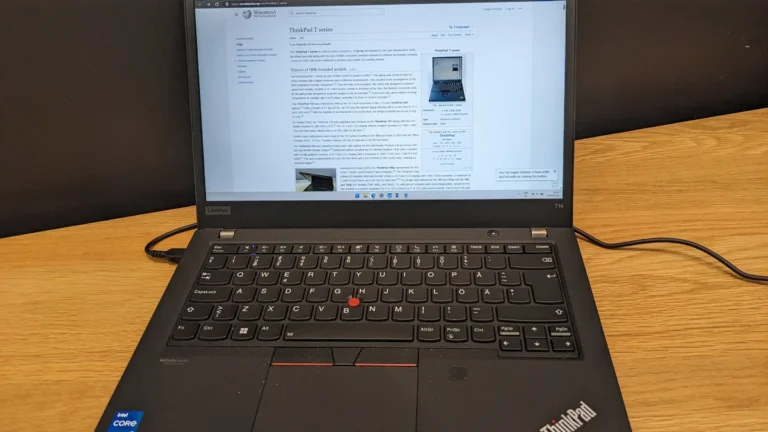
Lenovo sells more laptops than any other brand, and the reason is range. It has a sensible machine at almost every price, from cheap IdeaPads to ThinkPads that offices buy by the thousand. The ThinkPad line is the heart of the brand. ThinkPads are tested against MIL-STD-810H conditions for drops, dust, humidity and vibration, they carry spill-resistant keyboards with the red TrackPoint, and their keyboards are still the ones other brands are measured against. The ThinkPad X1 Carbon Gen 13 weighs about 1.09 kg, which shows how far a business laptop has come from the heavy black bricks of a decade ago.
The rest of the range fills in around it. Yoga covers 2-in-1 convertibles, Legion covers gaming, ThinkBook covers small business buyers who want ThinkPad reliability without the ThinkPad price, and IdeaPad covers everyday home and student use. That breadth is also the weakness. A cheap IdeaPad can have a dim screen and a plastic chassis that flexes, while a ThinkPad at three times the price feels like a different brand entirely. Check the exact model, not just the name. If your budget is tight, our guide to the best business laptops under $800 shows which Lenovo business models are actually worth the money. Within ThinkPad itself, our ThinkPad E vs T series comparison explains when the cheaper E series is enough and when the T series is worth the extra money.
Buy Lenovo if: you type for hours, you want a business laptop that lasts, or you want the widest choice of good Windows machines. Skip it if: you want a Mac, or you are shopping the very cheapest IdeaPads without checking the screen first.
2. Apple: the best battery life, if you live in macOS
Apple makes only two laptop lines, and that focus is the point. The MacBook Air is the default laptop for most people who want a Mac, and the MacBook Pro is the step up for creators and professionals. The current Air runs the M5 chip, which Apple announced in March 2026. The 13-inch model starts at $1,099 and the 15-inch at $1,299, and Apple rates both at up to 18 hours of video playback and up to 15 hours of web browsing. Independent tests land lower, usually 12 to 16 hours of mixed work, but that is still a full working day and a commute, which most Windows ultrabooks cannot match.
One warning matters more than any spec. Apple no longer sells the M4 Air new on its own store, so an M4 sold as new in late 2026 is remaining stock from a third-party seller, usually at a discount. That can be a fine deal, but only if the price reflects it and you know which chip you are buying. Check the MacBook Air M5 listings on Amazon and confirm the chip before you pay. MacBooks also hold their resale value better than any Windows laptop. The trade offs are real: memory and storage cannot be upgraded later, repairs cost more, and Windows-only software does not run. That last point decides the question for some buyers outright, because the banking software in our guide to the best laptops for investment banking runs its full version on Windows only.
Buy Apple if: you want the longest battery life, you already use an iPhone, or you edit video and photos in Apple software. Skip it if: you need Windows software, you want to upgrade memory later, or you game.

3. Dell: the business pick, with the most confusing names
Dell is the brand your IT department buys, and it is the brand with the most confusing lineup in 2026. In January 2025 Dell retired the Inspiron, Latitude, XPS, Precision and Vostro names and folded everything into three families: Dell for consumers, Dell Pro for business and Dell Pro Max for workstations. A year later, at CES in January 2026, it brought XPS back as its premium consumer line, with the new XPS 14 starting at $2,049 and the XPS 16 at $2,199.99. Dell Pro stayed as the business line, the old Latitude, and Precision returned as Dell Pro Precision for workstations. Alienware still covers gaming.
That history matters when you shop, because old stock wears old names. A Latitude on a shelf in 2026 is a genuine Dell laptop, but it is an older generation, and the same machine may also appear under its new Dell Pro name. Our guide on how to find a Dell laptop model number shows how to read the label and work out which generation you are actually looking at. Dell’s strengths are real: the widest configurability of any big brand, strong business support with on-site service options, and a business range that companies can standardise on. Its weaknesses are the naming mess, budget models that vary widely in screen quality, and survey scores that lag the leaders.
Buy Dell if: you are buying for a business, you want on-site support, or you want to configure a machine exactly. Skip it if: you want the simplest possible lineup, or you are buying a base consumer model without checking its screen.
4. HP: the widest choice at every price
HP sells more different laptops than anyone else, which is both its strength and its trap. In May 2024 HP retired its best-known consumer names, Spectre, Envy, Pavilion and Dragonfly, and replaced the whole consumer range with one family called OmniBook. The tiers run 3, 5, 7, X and Ultra, roughly mapping to the old Pavilion, Envy and Spectre classes. The business lines kept their names: EliteBook for enterprise and ProBook for small business. At CES in January 2026 HP also moved its OMEN gaming laptops under the HyperX brand, so gaming laptops are now branded HyperX OMEN, while Victus stays as the budget gaming line.
So if you are comparing an HP Pavilion against an HP Envy right now, you are shopping leftover stock of two discontinued lines. That is not automatically bad: a discounted Spectre x360 is still a beautiful machine with a sharp OLED screen. But it is old inventory or refurbished, not current production, and the price should show it. HP’s strengths are breadth and value. There is an HP at almost every price, the OmniBook X with a Snapdragon chip gives MacBook-like battery life at a Windows price, and HP scored 84 in the ACSI survey, second only to Apple. The weaknesses are the same as the strengths: the range is a maze, some Pavilion models have a history of hinge problems in field reports, and budget HP laptops can have dim screens. For the cheapest way into real gaming, our picks for the best gaming laptops under $500 include HP models worth comparing.
Buy HP if: you want the widest choice, a good business laptop, or strong value in the mid-range. Skip it if: you want a short, simple lineup, or you are buying an old Spectre or Envy at full price.
5. ASUS: the value pick for gaming and OLED screens
ASUS is the brand that gives you the most screen and the most graphics for the money. Zenbook is the ultraportable line, with models around 1.1 kg and a Ceraluminum finish, Vivobook covers everyday use, ProArt covers creators, and ROG and TUF cover gaming. ASUS also puts OLED screens on mid-range laptops more often than any rival, which is a real advantage for anyone who watches video or edits photos. The 2026 ROG Zephyrus G16 pairs an Intel Core Ultra 9 processor with an RTX 5070 Ti graphics card and a 16-inch OLED display with a 240 Hz refresh rate, which is serious hardware in a thin chassis.
That gaming strength is where ASUS wins most clearly. ROG and TUF laptops offer more graphics performance per dollar than Dell or HP at the same price, and features like a MUX switch, which routes the display straight to the graphics card for extra frames, appear on models that cost less than the competition. Our guide on what a MUX switch does explains why that feature is worth having, and our guide on how to check VRAM shows how to confirm how much video memory a gaming laptop actually has. The weaknesses are consistency: budget Vivobooks can feel plasticky, battery life varies a lot between lines, and ASUS sits seventh in the BGR reliability ranking quoted above.
Buy ASUS if: you game, you want an OLED screen without paying premium prices, or you want the most performance per dollar. Skip it if: long-term reliability matters more to you than specification, or you want the best keyboard in the business.
The 2026 name changes that catch buyers out
Three of the five big brands changed their lineups in the last two years, and most brand roundups have not caught up. Dell renamed its range in January 2025, then partly reversed course and brought XPS back in January 2026. HP retired Spectre, Envy and Pavilion in May 2024 and moved everything to OmniBook, then moved OMEN under HyperX in January 2026. Apple replaced the MacBook Air M4 with the M5 in March 2026 and stopped selling the M4 new on its own store.
None of this makes the old machines bad. It makes the price the thing to check. A laptop sold as a 2026 deal can be a 2023 or 2024 chassis, and that is fine if the discount is real and you know what you are getting. Before you pay, read our guide on how to tell how old a laptop is so you can confirm which generation you are actually buying.
What laptops are made in America?
The honest answer is that almost no laptop is fully made in America. Every major brand designs laptops in the US or elsewhere and builds them in Asia, because the chips, screens and batteries all come from global supply chains. What does exist is American assembly, and the two are not the same thing. Dell and HP assemble some enterprise models in the US, in Texas, and Lenovo has a facility in Whitsett, North Carolina, where some ThinkPads and desktops are built. But most of the Dell, HP, Lenovo and Apple laptops sold in the US are made overseas.
If buying American-assembled genuinely matters to you, the real options are small specialist builders. Falcon Northwest builds in Medford, Oregon, Velocity Micro in Richmond, Virginia, Digital Storm in California and Origin PC in Miami, Florida, and Linux-focused builders like System76 and Purism also assemble in the US. These are expensive, low-volume machines, mostly gaming or specialist workstations, and even they use imported components.
Which laptop brand should you buy?
Match the brand to the job, not to a ranking. Students on a tight budget should start with HP, Lenovo or ASUS, and our picks for the best gaming laptop under $300 show how far a small budget can go. Business buyers should start with Lenovo ThinkPad or Dell Pro, and our guide to the best business laptops under $800 narrows those two ranges to the models worth buying. Creators who work in Apple software should buy a MacBook, and creators on Windows should look at ASUS ProArt or a Lenovo Yoga.
Gamers should start with ASUS ROG or TUF, then compare Lenovo Legion and HP HyperX OMEN before deciding. If frame rates matter, our guide on how to increase FPS on a gaming laptop covers the settings that help most on any of these machines. And whatever brand you choose, plan the machine around the screen and the storage, not just the processor: our guide to laptop screen sizes shows the exact dimensions of each size, and our guide to how much storage you need stops you buying a 256 GB drive you will outgrow.
Frequently Asked Questions
What is the best laptop brand overall?
There is no single best brand. Lenovo is the safest all-round pick for work, Apple leads on battery life and reliability surveys, Dell is strongest for business buying and support, HP gives the widest choice at every price, and ASUS gives the most gaming performance and OLED screens for the money. Pick the brand that wins for your job, then judge the exact model.
Which laptop brand is the most reliable?
It depends on the survey. The BGR reliability ranking from January 2026, which averages Consumer Reports owner data with PCMag reader scores, puts Apple first, Lenovo fifth, ASUS seventh, HP ninth and Dell tenth. The American Customer Satisfaction Index for 2024 puts Apple first at 85 and HP second at 84, with Dell and Lenovo tied at 80. The model matters more than the brand: a ThinkPad and a budget IdeaPad are not equally reliable.
What are the big names in laptops?
The five big names in laptops are Lenovo, HP, Dell, Apple and ASUS. Together they sell most of the laptops bought in the US. Acer, MSI, Samsung, LG and Microsoft also sell laptops, and they lead in specific niches: Acer on budget value, MSI and Razer on gaming, Samsung on displays and LG on lightweight screens.
Is Dell or HP better?
Dell is better for business buying, with stronger configurability and on-site support through its Dell Pro range. HP is better for choice and value, with the widest range at every price through its OmniBook and EliteBook lines. For everyday home use there is little between them, so compare the exact models, especially the screen, and buy the one with the better screen at your price.
Are any laptops made in America?
No major brand makes its mainstream laptops entirely in America. Dell and HP assemble some enterprise models in the US, Lenovo builds some ThinkPads at its Whitsett, North Carolina facility, and small builders like Falcon Northwest, Velocity Micro, Digital Storm and Origin PC assemble machines in the US. Even those use imported components, so check the specific model if American assembly matters to you.
Is the MacBook Air M4 still worth buying in 2026?
Only at a clear discount. Apple replaced the M4 Air with the M5 in March 2026, starting at $1,099 for the 13-inch model, and no longer sells the M4 new on its own store. An M4 sold as new is remaining third-party stock. It is still a good laptop, but pay a used-generation price for it, and confirm the chip before you buy.